The Professionalism Trap: Why "Growing Up" Shouldn't Mean Selling Out
The Moment of Betrayal
There is a specific, quiet moment in the life of almost every successful founder. It usually happens after the first big funding round, or perhaps when the team crosses the 50-person mark. You look around at the chaotic, vibrant, slightly messy organism you’ve built - driven by instinct, trust, and late-night pizza - and a voice in your head (or perhaps a voice on your board) whispers: “It’s time to grow up.”
In their provocative book Confronting Our Freedom, Peter Block and Peter Koestenbaum identify this precise inflection point. On page 24, they describe the paradox of the entrepreneur who enters the marketplace seeking ultimate freedom, only to find themselves building a prison of their own design. As the business grows, the founder becomes convinced that they must replace free choices with "professionalism."
The narrative is seductive: Professionalism means predictability. It means org charts, KPIs, quarterly business reviews, and "best practices." It means trading the wild, human agency of the early days for the safety of a well-oiled machine.
But here is the uncomfortable truth that few consultants will tell you: That version of "growing up" is a lie.
It is a mantra designed to make companies easier to manage, not more effective to work in. And for the founder who started a company to escape the drudgery of corporate life, it is the ultimate betrayal. You didn’t leave the cage just to build a newer, more expensive one.
The Hollow Promise of "Best Practices"
The pressure to "professionalize" is often framed as a necessary evolution. We are told that without rigid hierarchy and standardized processes, chaos will reign. But as we comply with this advice, something vital begins to die. The "soul" of the startup - that intangible energy that attracted early employees and loyal customers - suffocates under layers of administration.
Gary Hamel, in his manifesto Humanocracy, argues that this trade-off is not just painful; it is economically inefficient. He describes bureaucracy as "soul-crushing," a system that treats human beings as "resources" (instruments to be deployed) rather than agents with free will. When we succumb to the standard model of professionalism, we inadvertently strip our teams of the very autonomy that made them innovative in the first place. We stop asking “What is the right thing to do?” and start asking “What is the procedure for this?”
Block and Koestenbaum warn us that this shift is fundamentally an anxiety response. We are anxious about the unpredictability of freedom, so we build structures to contain it. We trade the anxiety of choice for the depression of compliance.
The Counter-Narrative: Choosing Greatness Over Bigness
It doesn’t have to be this way. There is a quiet resistance movement in the business world - a lineage of founders who looked at the "professional" playbook and threw it in the trash.
Consider the philosophy of Bo Burlingham’s Small Giants. Burlingham documented companies that had every opportunity to scale into massive, publicly traded entities but deliberately chose not to. They rejected the pressure to get "big" in favor of being "great." These founders realized that traditional growth often requires compromising the intimacy, culture, and quality of life that made the business worth building. They proved that you can run a world-class, profitable, and respected organization without adopting the sterile affectations of a Fortune 500 corporation.
Similarly, Paul Jarvis, in Company of One, challenges the default assumption that "growth" is the only metric of success. He argues that resilience and autonomy are far more valuable than adding headcount for the sake of ego. For Jarvis, the goal isn't to build an empire that dominates your life, but a business that supports your life.
The "professional" mask tells you that you must constantly expand. The free founder asks: “At what cost?”
Redefining Professionalism
If we reject the corporate definition of professionalism, what replaces it? It isn't amateurism. It isn't chaos. It is chosen accountability.
In Reinventing Organizations, Frederic Laloux describes "Teal" organizations that operate without traditional management hierarchies. These aren’t chaotic collectives; they are highly disciplined systems based on peer accountability rather than top-down control. In these companies, "professionalism" doesn't mean wearing a suit or hiding your emotions; it means bringing your "whole self" to work and taking responsibility for your promises.
This is the freedom Block and Koestenbaum allude to. True professionalism is not about compliance with a handbook but the willingness to own your choices in the marketplace. It is the courage to say to a client, an investor, or an employee: “We do things differently here, not because we don't know better, but because we know what matters to us.”
Yvon Chouinard, founder of Patagonia, famously enshrined this in his book Let My People Go Surfing. He didn’t build a "professional" company; he built a company that reflected his values. If the surf was up, work stopped. By traditional MBA standards, this is unprofessional. By the standards of human freedom and excellence, it was visionary.
A Sanctuary for the Uncompliant
I am writing this because I see too many brilliant founders dim their lights in an effort to fit in. I see startups that used to be electric with possibility turn into gray, meeting-heavy bureaucracies because they thought that’s what "serious" businesses do.
My mission is to support the startups that refuse to comply with this mantra. I am here for the founders who want to remain (or regain) the freedom of their early days.
We need to normalize the idea that you can be successful and free. You can scale your revenue without scaling your bureaucracy. You can have serious impact without taking yourself too seriously.
- You don't have to "grow up" if growing up means losing your curiosity and joy.
- You don't have to "professionalize" if professionalizing means treating your people like cogs in a machine.
- You don't have to "scale" if scaling means destroying the culture you built.
The marketplace is hungry for authenticity, not more polished, soulless clones. The world doesn't need another "professional" company. It needs more human ones. It needs yours.
So, let us confront our freedom not as a burden to be managed, but as the very source of our power. Let’s build companies that are grown-up enough to deliver results, but brave enough to stay wild.
About the Author
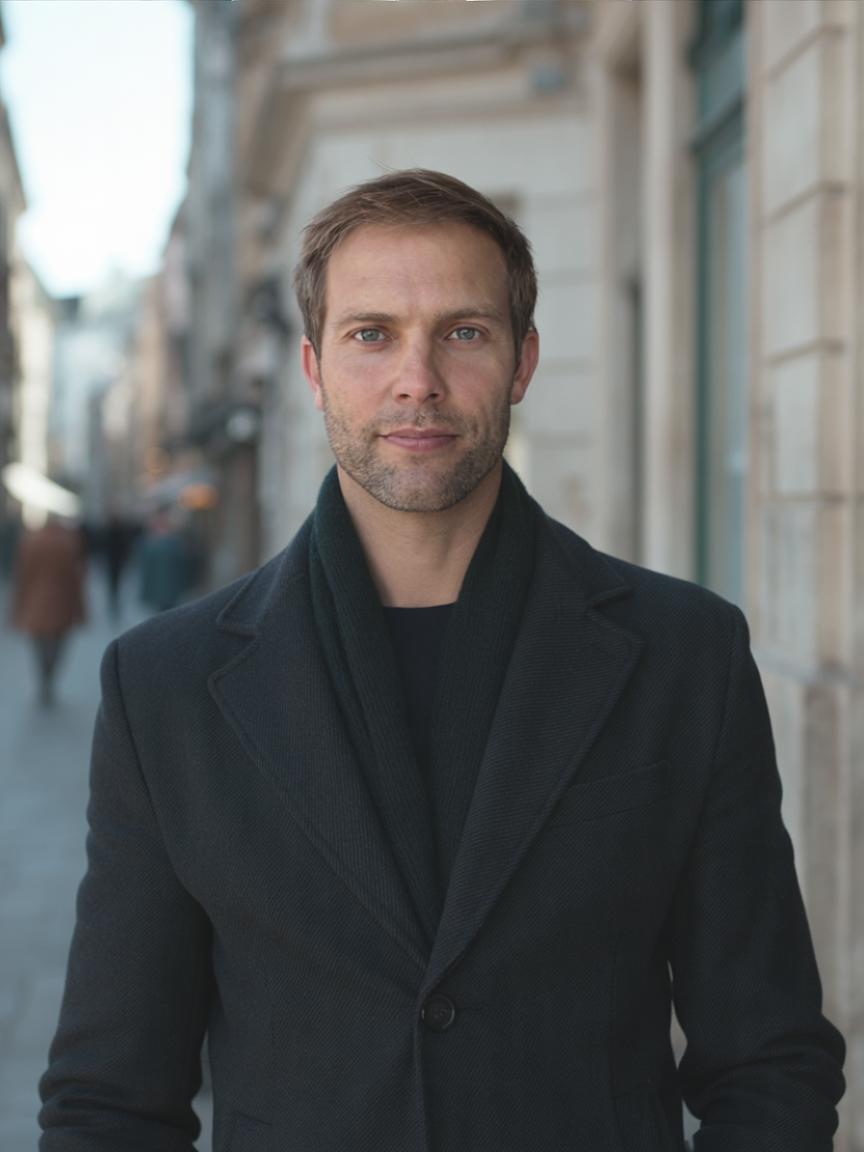
Kevin Rassner is an expert in applied organizational development, supporting companies through transformation processes that span strategy, leadership, and culture. He combines over ten years of leadership experience with a systemic perspective on effective collaboration.
About the Author
Kevin Rassner is an expert in applied organizational development, supporting companies through transformation processes that span strategy, leadership, and culture. He combines over ten years of leadership experience with a systemic perspective on effective collaboration.