Organizational Systems That Scale
Transform organizational structure from scaling bottleneck into competitive advantage - through systemic design, not reorganization theater.
Organizational Development Case Studies
Bosch: From Bottleneck to Blueprint
2-year transformation
The Challenge
300-person organization serving 500+ customer projects. Traditional top-down leadership created decision bottlenecks - local teams couldn't move fast enough to stay competitive.
What I Did
Organizational redesign: Eliminate centralized Group/Department Manager roles that controlled people, technology, AND customer interactions simultaneously. Distribute those responsibilities to enable speed at the edges.
The Impact
- •Leadership transition: 40 leaders through transformation → 87.5% retention (5 departures)
- •Strategic capacity unlocked: Organization could finally focus on strategic priorities instead of operational firefighting
- •Scalable efficiency model: Design became standard for entire business unit
Bosch w/ Cariad: Making Velocity Visible
2.5 years
The Challenge
1200-person engineering organization had long feedback cycles. Slow time-to-market meant lost opportunities and accumulating costs.
What I Did
Organizational structure obsessed with fast feedback loops and continuous demos. Compress cycles so decision-makers see reality faster.
The Impact
- •Cycle time compression: Feedback → solution in days, not quarters
- •Cost of delay eliminated: Decisions based on current market reality, not stale information
- •Efficiency at scale: Team handled more parallel projects with fewer resource constraints
- •Executive alignment: Stakeholders visibly understand where investment is going
The Systemic Intervention
Leadership requirement: Give positive feedback when demos fail. Celebrate attempts. Embrace failing fast. Result: Demos became fun, not feared.
ITK Engineering GmbH: Building Before the Market Sees It
2 years
The Challenge
Top management saw no market for AI engineers. Autonomous driving development was nascent; future demand unclear.
What I Did
Built targeted capability with self-organizing structure. Designed for efficiency and learning velocity, not headcount growth.
The Impact
- •Market timing advantage: 100% utilization from day one - proved the market existed
- •Efficient resource use: Self-organizing structure delivered more output per person
- •Talent retention: Team thrived and went on to exceptional careers (low turnover cost)
- •Strategic positioning: First-mover advantage in emerging market segment
Bosch (parallel roles in Cariad project + internal initiative): Building Facilitator Excellence Across Bosch Mega-Projects
1 year transformation
The Challenge
150 facilitators (Scrum Masters) across team/cluster/domain levels maintained processes without innovation. Junior-heavy teams, hiring diluted skills by copying existing gaps instead of needed competencies, no formal leadership addressing the systemic competence crisis.
What I Did
Developed science-based competence framework with assessments that clarified hiring expectations and exposed gaps. Mapped competencies to core tasks (facilitation, project cybernetics, Azure DevOps) and created 'Method Ownership Groups' led by project experts. Empowered them to deepen skills and elevate deliverables across both projects.
The Impact
- •Accelerated senior-junior learning cycles. Experts rotated through groups to round profiles and drive project quality surges.
- •Established clear topical ownership. Leadership embraced facilitators as authorities, boosting their influence and leadership proof.
- •Inside-out intervention dismantled silos, sparked local decision-making, and transformed reactive maintainers into proactive excellence engines.
Bosch (both Cariad + parallel internal project): Decentralizing Decisions in 300-1500 Person Environments
1 year transformation
The Challenge
Centralized decision-making created bottlenecks in massive peer groups (300+/1500+). Impediments lingered, trust couldn't scale organically. Leadership often undermined autonomy despite the need for speed.
What I Did
Taught decision principles across all levels (leadership first to model non-undermining behavior). Introduced binding decision templates + universal format for anyone to propose decisions (sync/async). Drivers trusted to consult experts, with leaders sharing systemic guidance only.
The Impact
- •Decision speed exploded. Teams resolved impediments independently without waiting for top-down clearance.
- •Responsibility and freedom bloomed at scale. Robust process emulated trust impossible via personal peer ties alone.
- •Proved decentralization viable in enterprise chaos. Facilitators became navigators of complexity with sustained autonomy.
Bosch with Cariad: Outcome Steering via Storytelling OKRs Across 150 Teams
1.5 year transformation
The Challenge
Greenfield project setup for 150 teams lacked alignment mechanisms. Leaders clung to input control illusion (dictating 'who does what') despite complexity demanding outcome focus. No prior structure for shared impact communication.
What I Did
Introduced OKRs with storytelling spin from previous experiences: Leadership agreed on handful of key project metrics (e.g., DORA metrics (opens in a new tab) like 60% Change Lead Time reduction). Teams shifted from 'what we do' (e.g., 'Implement change-based testing') to 'customer impact stories' (e.g., 'Developers get production feedback 80% faster, down to 10 minutes'). Added telemetrics to track real progress. Fought through resistance in hard meetings to dismantle controllability myth and build trust in outcome steering.
The Impact
- •Clear impact language aligned teams across CI/CD, vehicle builds, and testing. Everyone understood 'what for' not just 'what', shifting value from nodes to collaborative edges.
- •Converted toughest leadership critics into advocates. Gained trust in complex systems thinking where outcome steering beats input control.
- •Massive leadership development in trust and empowerment. Teams self-organized around customer (developer) value, accelerating project progression.
How I Work as an Organizational Development Expert
Systemic Consulting Process
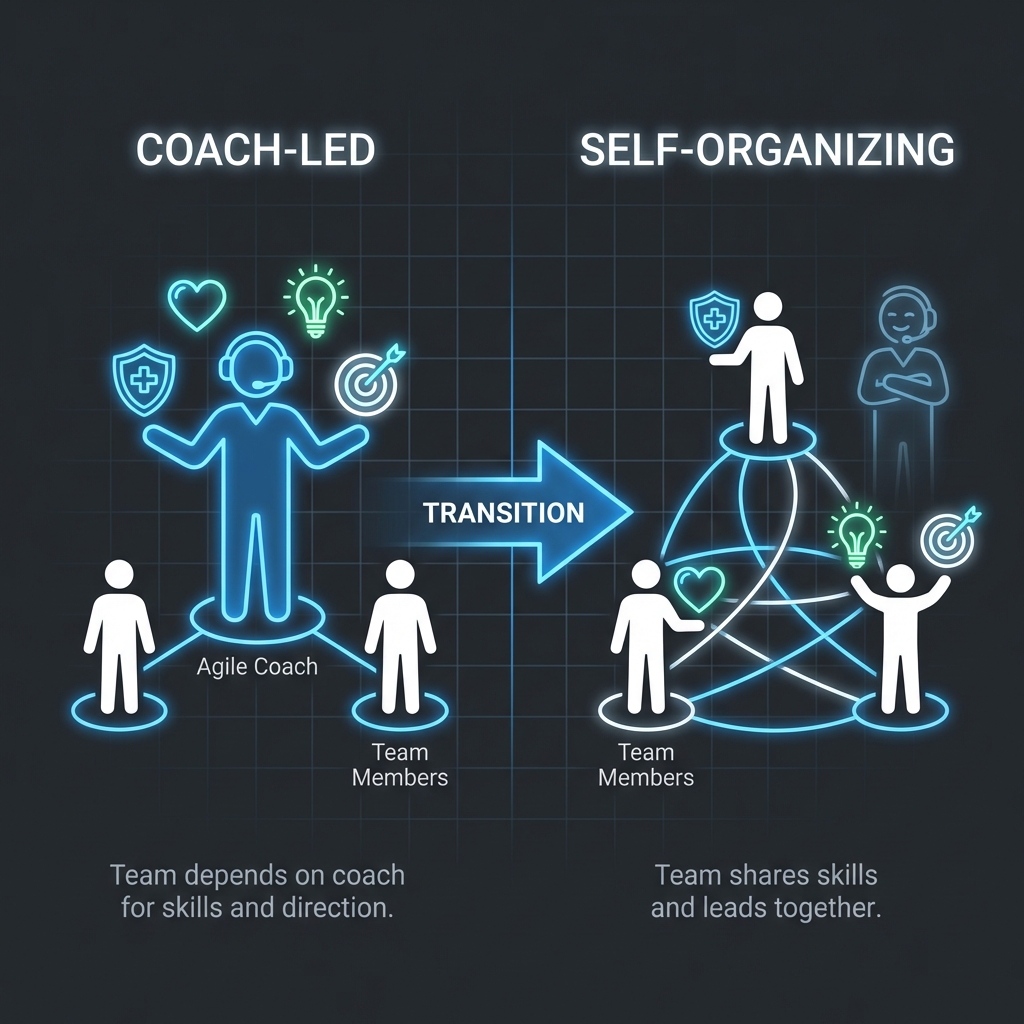
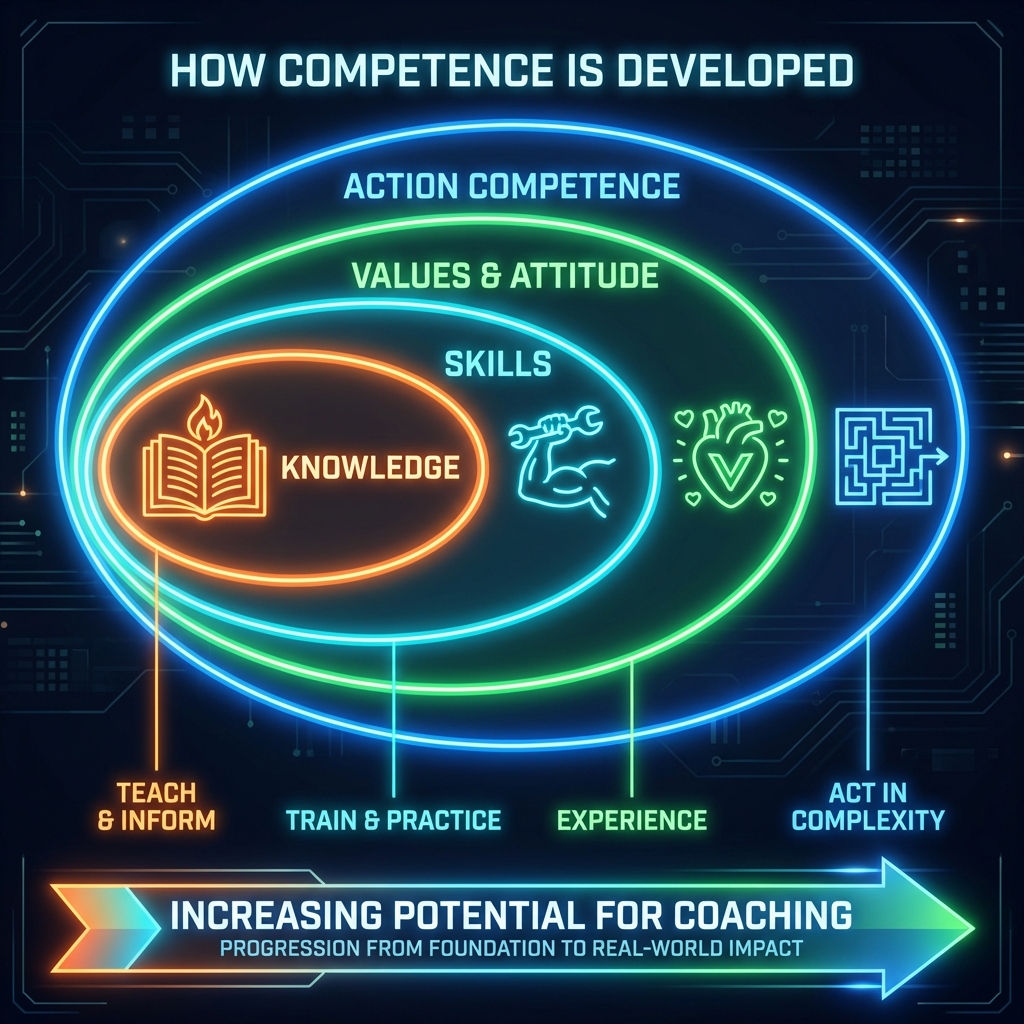
Competence Model
Understand the System
Map the organization as a system - how decisions flow, where bottlenecks form, what incentives drive behavior, what constraints exist.
Analyze the Gap
Where does the organization want to go? What's the current capability? What's the actual gap between strategic intent and execution capacity?
Design Systemic Interventions
Small, precise changes to the system (structure, incentives, processes, rituals) that create disproportionate impact because they work WITH the system's natural dynamics, not against them.
Implement & Adapt
Hands-on execution with leaders. I don't just design on whiteboards - I step into operational roles and prove the model works.
Enable Continuous Adaptation
The goal isn't a "perfect org chart" - it's building an organization that can continuously adapt itself as your business evolves.
Is Your Organization Efficient Enough?
Whether you're optimizing for profitability, speed, or resilience, the right organizational design multiplies what your people can achieve. Let's discuss your specific challenge.