
What Özil teaches us about diversity
Disclaimer: I do not support views that are suppressing other people's rights or well-being under the cover of free speech. There is a limit to freedom of speech when it is on behalf of others, often less powerful.
The case of Özil(opens in a new tab) has put me into disbelief again and again in the last weeks. Last week, when I was discussing the case with an acquaintance from Sweden, I noticed something. I had experienced a similar problem at company level before.
At that time, a colleague had publicly sympathized with right-wing party AfD in her social media. Another colleague who had noticed this approached me and asked if I should address or report it. What do these cases have in common?
Where does diversity begin, where does it end?
When we speak of diversity, many first think of gender and ethnic diversity. Diversity, however, contains much more than these very obvious criteria.
Different personality types are just as much a part of this as different opinions. Unfortunately, there is a trend today that is poisoning the public debate as well as many companies: the desire for diversity is often very selective, i.e. there are criteria which may/must be diverse and others which are not addressed.
This has nothing to do with diversity, but is a potentially harmful form of exclusion. For example, it may be important for a company's employees to have a certain gender diversity, but they would rather have colleagues with similar political and socio-cultural backgrounds. Under the disguise of diversity, this creates a larger in-group and calms the guilty conscience.
The next step in this process is the demand of parts of the out-group and their sympathizers for regulatory steps to put these same parts of the out-group on an equal footing. This can be observed above all in democratic society, since a platform is offered here to all (in companies, however, this is not the case, since the members of the Out-Group are often not even employed and therefore have no influence on the corporate policy).
The next step is to adjust the laws to meet the new requirements.
How long before everyone's happy?
A good model to illustrate what happens here is Peter Singer's Expanding Circles model(opens in a new tab). This shows that our empathy, individually and as a society, is drawing ever larger circles. This is not a continuous process, of course, but takes place in waves and can also be thrown back (in fact, the size of one's own empathy circle is strongly dependent on the fulfilment of one's own basic needs. A starving West African has no sense of empathy for the problem of the Rohingyas. Nor is an American steel worker at risk of old-age poverty motivated to vote for transgender rights).
It is interesting that Peter Singer stops after "Mankind as a whole". I would argue that our development "Animals as a whole", "Planet as a whole" and "All life in Universe" are other circles to be walked through. So the end is far from in sight.
What is happening is that the number of regulations is exploding and more and more marginal groups are coming to the fore. There is also an increasingly loud counter-movement (usually of the innermost in-group) which sees this process of inflating as a threat to their privileges and traditions.
Your eggs offend me!
So it turns out that we are dealing with a never-ending process. And even if one day we can no longer find someone who is treated unjustly, this does not mean that nobody feels that they are no longer being treated unjustly. Current research suggests(opens in a new tab) that we humans are very bad at perceiving positive developments as such. In experiments, for example, pictures of men were shown and test persons were supposed to mark the dangerously looking men. The number of men marked as threatening by the subjects remained the same, regardless of how many actually threatening images were part of the experiment. If there was not a single threatening image, then as many were marked as threatening as if the experiment consisted only of threatening images - no more and no less (statistically of course not, but in meaning).
The better people are doing, the smaller are the problems that subjectively threaten their existence. So it's not surprising that Google has removed the eggs(opens in a new tab) from his salad emoji in order not to exclude or even offend vegans.
For these reasons I fear that the path of regulations is the wrong one. We will never reach the point where everyone is happy and we will alienate a lot of people along the way who see their basic needs threatened by such extravagances.
Social Justice not through regulation, but through random selection?
An interesting approach to social justice without regulation comes from the beginnings of democracy. In ancient Athens, large parts of the parliament were occupied by randomly elected citizens. This process guaranteed that the opinions and wishes of society had an influence on political decisions. The author Brett Henning even advocates that we resurrect this system (very worth watching).
Diversity as a magic formula against the shortage of skilled workers?
What do these findings mean for companies? It is possible to achieve diversity through regulations, but in my opinion it is harmful. While the women quota works to bring women into the company, it does not help to make the selection and promotion process fair (and there is little worse for companies than perceived unfairness(opens in a new tab)). As in society, there must be a pre-selection to cover essential conditions. Members of parliament must be of legal age, residents or citizens of the country and medically sane.
In companies, this pre-selection can include hard skills and soft skills in the hiring process. Bluewolf CEO Eric Berridge has achieved incredible success and growth with his "hiring smart people" approach. Less than a hundred out of a thousand employees have a degree in computer science or engineering - a remarkable value for one of the most successful software consulting firms. Thus he hired a bartender who could listen well because he had difficulties understanding the requirements of his most important customer. The resulting diversity (not all employees are computer scientists) is genuine and justified. For this reason Bluewolf does not talk about diversity, but about inclusion(opens in a new tab).
Diversity is being asked to the party: inclusion is being asked to contribute to the playlist.
Nicole Aebi-Moyo, Bluewolf Blogger
Even after the recruitment process, it can be very inspiring and helpful not always to let "professional politicians" make the decisions. By randomly distributing mandates and decisions to employees, the experts can chant old assumptions and incorporate new views in the subsequent advisory process. The influence of personal hidden agendae is minimized.
Such an attitude and decision-making process could also train employees to face unpleasant opinions with discussion and not with exclusion. When I lived in Canada for a year I was thrilled to live in a city where there are no majorities but only minorities. Exclusion is therefore not an option, since in the end one only excludes oneself. Cooperation and discussion with different people is unavoidable when you live in such a diverse environment.
Ultimately, people and also collectively a society must be able to withstand it if different opinions exist and are made public. But it is the responsibility of managers and companies to demand and train these skills from their employees. Looking back, my advice to my colleague about the right-wing party AfD sympathizer should have been that the issue should have been raised openly. It must never again happen that one is discriminated against for the support of a legally elected party, regardless of whether one's views fit or not. An athlete should also be allowed to take photos with anyone who has respected politicians standing next to him, shaking hands and concluding deals without being penalized. Anyone can find the party or a politician stupid, but we must also bear it if someone does not do so.
About the Author
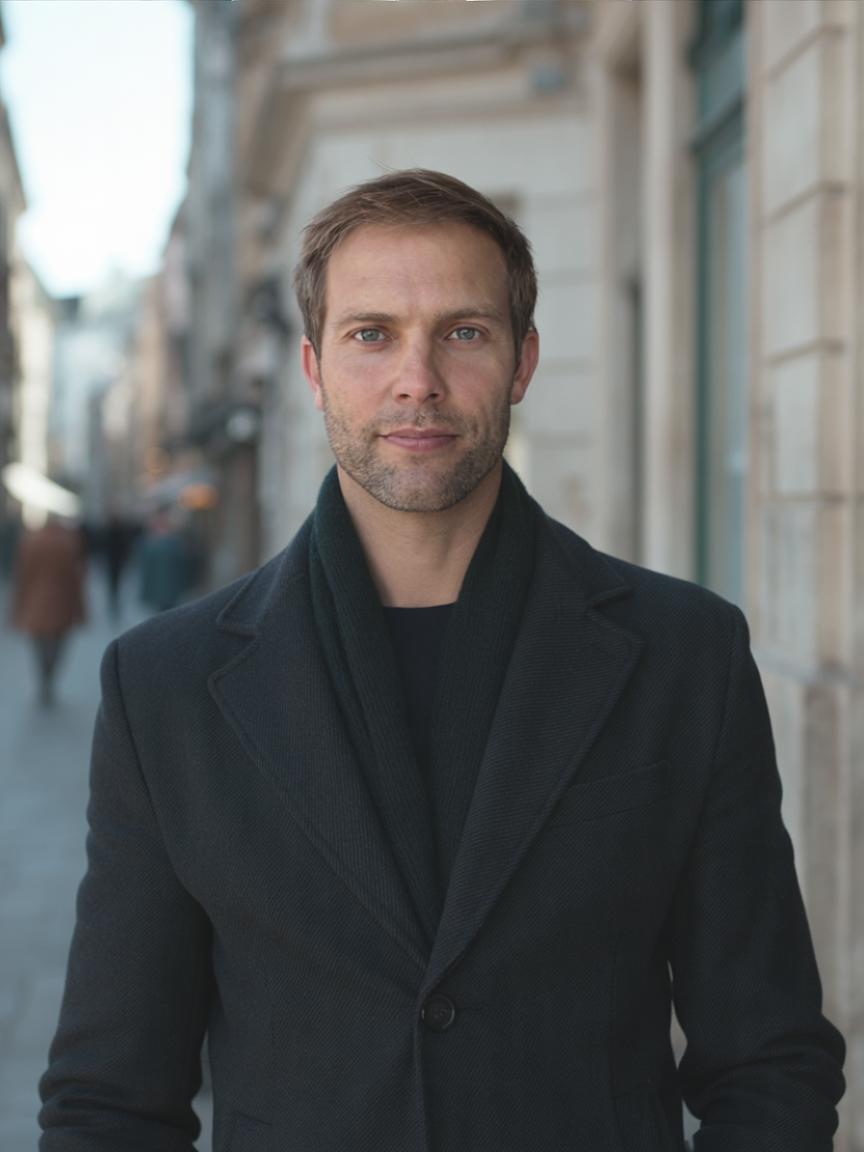
Kevin Rassner is an expert in applied organizational development, supporting companies through transformation processes that span strategy, leadership, and culture. He combines over ten years of leadership experience with a systemic perspective on effective collaboration.
About the Author
Kevin Rassner is an expert in applied organizational development, supporting companies through transformation processes that span strategy, leadership, and culture. He combines over ten years of leadership experience with a systemic perspective on effective collaboration.